
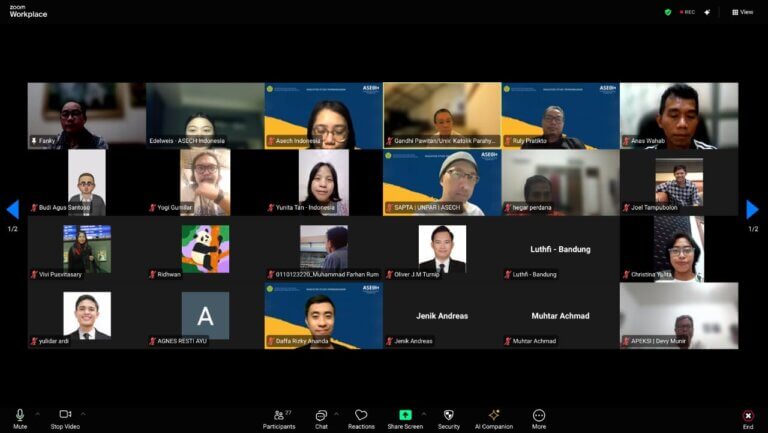
June 10, 2025 — In an inspiring discussion session, Indonesian technology practitioner and entrepreneur, Fanky Christian, shared his deep insights on IT management, digital transformation, and smart city development strategies in Indonesia. The event was attended by participants from various backgrounds, including government, industry, and academic sectors, with high enthusiasm for the theme of technology collaboration and sustainable development.
Transformation of Indonesia’s IT Industry
Fanky opened the session by sharing his personal experience in developing an IT business and his involvement in various associations such as Komindo and APBI. He highlighted how the landscape of the Indonesian IT industry has evolved, from a traditional retail-based business model to an ecosystem that relies on system integration, AI adoption, and blockchain technology. Fanky also underlined the importance of creating incentives such as tax cuts to accelerate technology adoption among national business actors.
Challenges and Opportunities for Smart Cities in Indonesia
The discussion continued with a discussion of the challenges in developing smart cities, including the lack of regulatory readiness and limited capacity in public-private partnerships (PPPs). Fanky emphasized that the success of smart city initiatives depends not only on technology, but also on transparency, public participation, and adaptive governance. He cited the implementation of CCTV, digital twin, and public Wi-Fi networks as concrete steps that have been successful in several cities.
Encouraging Efficiency and Community Involvement
Fanky emphasized the importance of data-based decision-making in improving the efficiency of public services. The use of technology such as air quality monitoring and smart waste management is a vital component in improving the quality of life in urban areas. He also invited the government and business actors to collaborate in developing a competitive and inclusive local e-commerce platform.
Collaboration between Academics, Government, and Industry
In the question and answer session, various inputs were presented by participants, including representatives from academics and the public sector. One topic that emerged was the importance of e-governance and how collaboration between the education sector and industry can strengthen smart government systems. Fanky encouraged the use of open-source technology and local resources as cost-effective solutions in supporting digital transformation in the regions.
Smart City Success Indicators
In closing, Fanky emphasized that the success of smart city projects must be evaluated regularly by referring to concrete indicators: citizen participation, satisfaction with public services, and economic impact. He reminded that smart city development is not just about technology, but about creating structures and governance that are able to adapt to changing times.