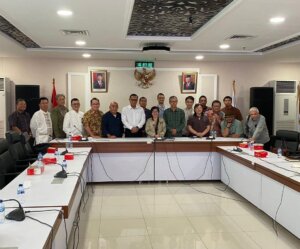
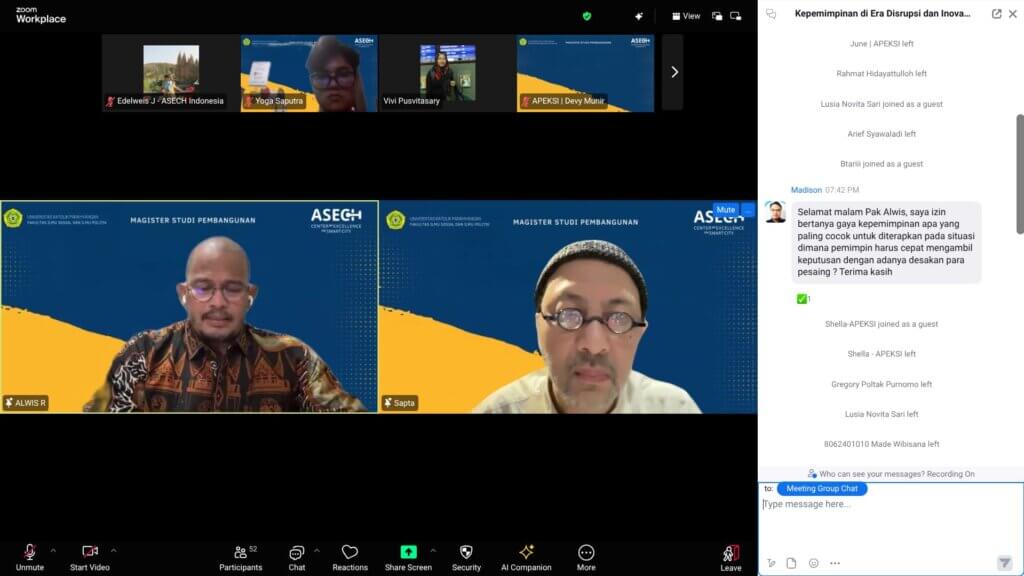
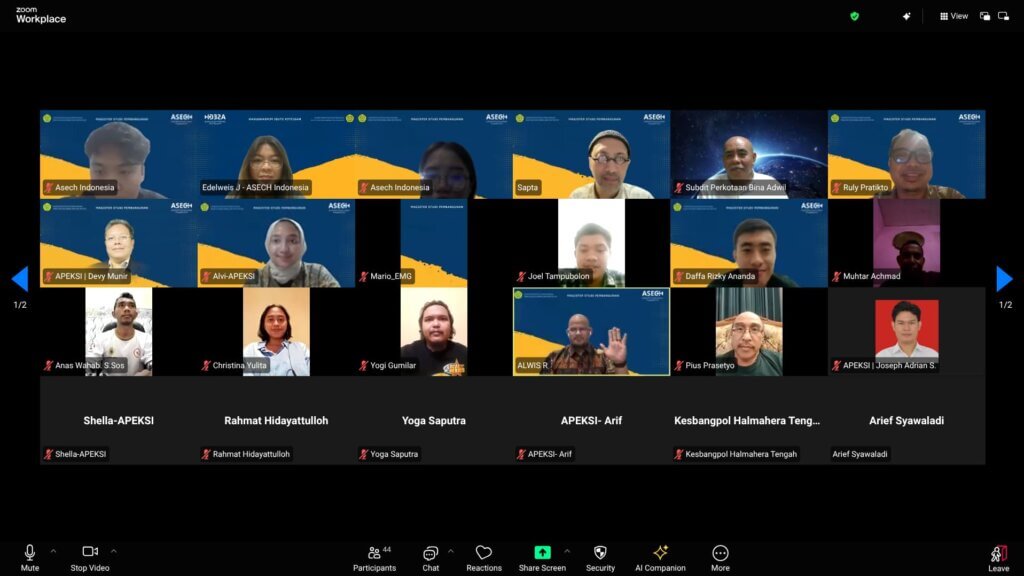
City leadership in Indonesia now faces new challenges in an increasingly complex and digitalized world. In a series of discussions and public lectures facilitated by the UNPAR Master of Development Studies Program, various strategic thoughts on city governance and leadership emerged, guided by keynote speaker Alwis Rustam, Executive Director of APEKSI. The discussion opened up insights into the importance of building an inclusive and collaborative city ecosystem as a foundation for effective leadership.
Four Models of Cities in Indonesia
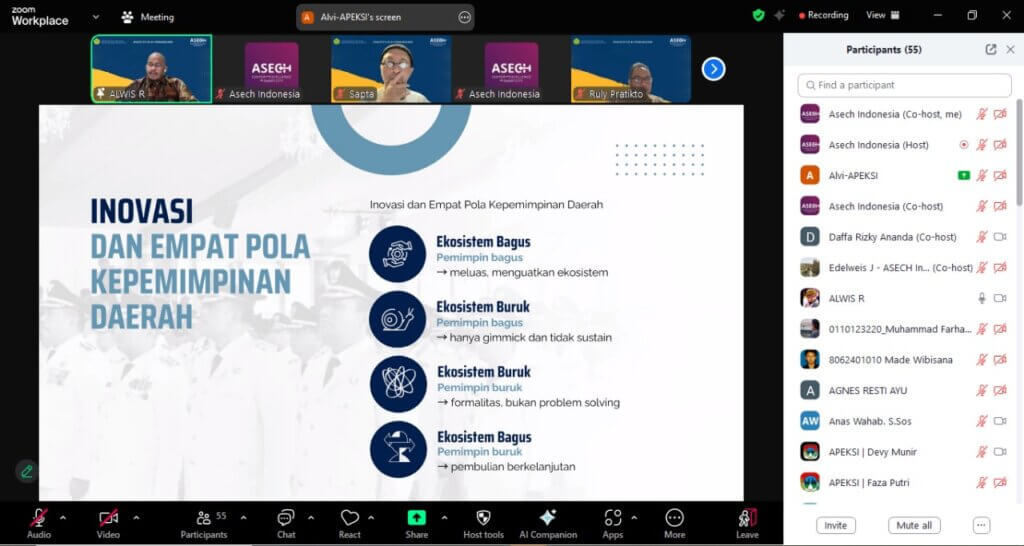
Based on his experience assisting 98 cities, Alwis identified four general models of city leadership in Indonesia:
- Transformative City: Leaders and ecosystems that are equally strong, producing sustainable and replicable innovations.
- Pragmatic City: Good leaders but in a weak ecosystem; producing short-term innovations that do not always have a broad impact.
- Auto-Pilot City: No real initiatives, the city runs without a clear direction although relatively stable.
- Chaotic City: Leaders and ecosystems are both weak; innovation tends to be symbolic without touching the root of the problem.
“Leadership is not just about figures, but about building a city ecosystem that supports innovation and sustainability,” Alwis emphasized.
Leadership Ecosystem: The Key to City Progress
In the following discussion, the city ecosystem was understood as a combination of five pentahelix elements: government, civil society, media, private sector, and academics. The balance and interaction between these pillars determine the success of city transformation.
This topic raises an important question: How is the concept of this leadership ecosystem applied in island-based regions? In the midst of development planning processes such as Musrenbang which often do not fully capture local aspirations, a more contextual and participatory approach is needed.
Governance and Leadership Style Challenges
Alwis highlighted the importance of a leadership style that suits the character of the city. He emphasized that bureaucrats who understand politics are better prepared to become regional leaders than politicians who are new to bureaucracy.
In addition, collaboration between sectors must be facilitated by supportive regulations, as well as a data-based decision-making process. However, challenges arise due to information distortion on social media, which threatens the deliberative process and weakens public rationality.
Populism, Algorithms, and Digital Leadership
The discussion evolved towards populist leadership that is increasingly prevalent in the algorithm era. Alwis introduced the concept of “algorithmic leadership,” which is the ability of leaders to read and respond to digital trends to build connections with society.
Global examples such as Obama and Trump show how important it is for leaders to be responsive, not just reactive. Therefore, he suggested that development and leadership study programs include the topics of social algorithms and information ethics in their curriculum.
Smart City and the Role of Stakeholders
In closing, Alwis explained the importance of smart city initiatives that are not only driven by technology, but also by the active involvement of citizens and creative communities. Surabaya is an example of a city that is able to build a real-time data collection system, which allows decision-making based on actual conditions.
However, he reminded that the success of one city is not always easy to replicate, because there are still many other cities that are trapped in patterns of political transactions and resistance to change.
Conclusion: City Leadership is a Product of the Ecosystem
City transformation in Indonesia cannot depend on a single charismatic leader. It requires a strong ecosystem, collaborative leaders, and a critical but constructive society. Future leaders need to understand the digital landscape, value cross-sector participation, and have the courage to break through bureaucratic stagnation for real innovation.
“True leadership is not formed by popularity alone, but by the courage to build an ecosystem that matures the city.”
Author : Angelika Lantu