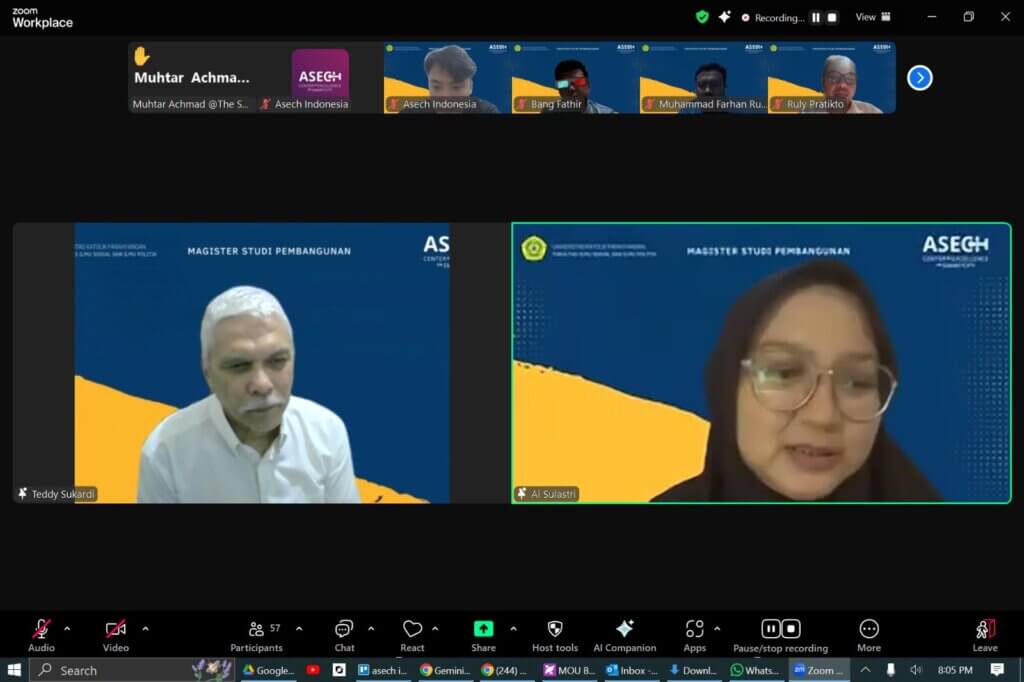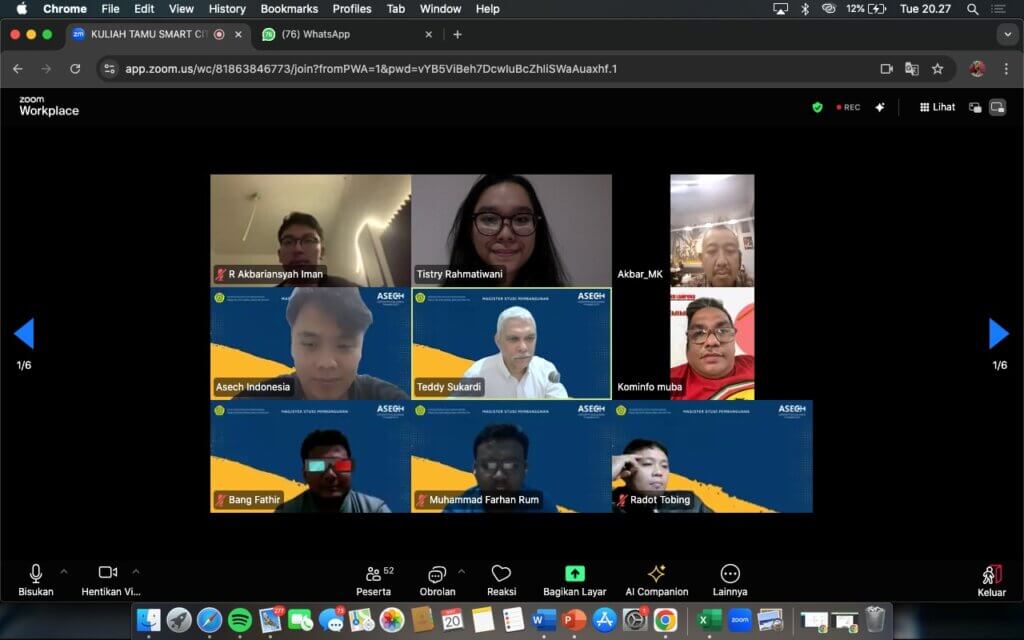
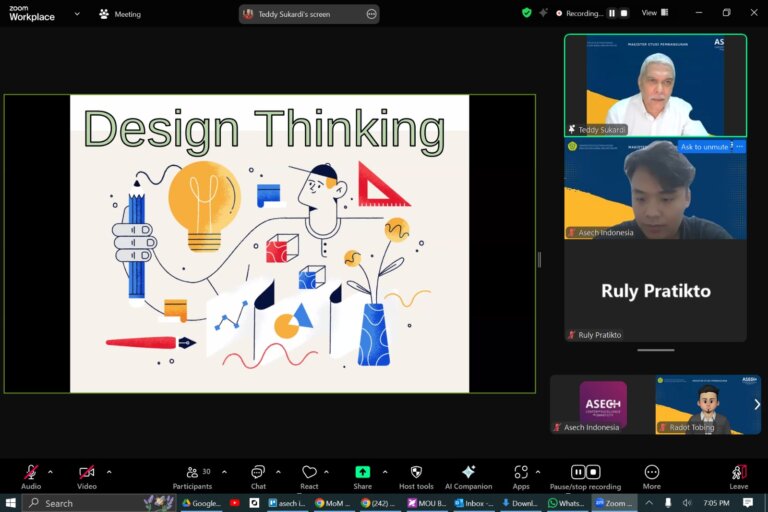
Public service innovation and smart city development are crucial topics in the modern era. Recently, a guest lecture series focused on Smart City Governance and design thinking provided in-depth insights into how cities can grow sustainably with a focus on the needs of their citizens. Led by Mr. Teddy Sukardi, an expert in design thinking, and hosted by Mr. Ruly, head of the Master of Physical Development Studies program, the session highlighted the importance of a human-centered approach in creating smart cities that truly serve all.
Public Discussion: Innovation and Challenges
The session began with a survey of public service innovations and why some of them fail. Mr. Teddy explained that failure often occurs because of an overemphasis on technology without understanding user needs. This discussion paved the way for the understanding that successful innovation must be rooted in real problems faced by the community.
Design Thinking: The Foundation of Human-Centered Innovation
Mr. Teddy introduced the concept of design thinking, a five- or six-stage approach that emphasizes empathy, problem formulation, ideation, prototyping, and testing. He explained that design thinking is not only for products, but can also be applied to urban services. Examples such as the development of ride-hailing apps and healthcare services demonstrate how design thinking can produce effective and relevant solutions. The key is to understand the user experience through observation, interviews and data collection to identify core issues and improve public services.
Balanced Smart Cities: More Than Just Technology
The discussion moved on to the concept of smart cities, which emphasizes the importance of social, economic and environmental balance. Mr Teddy introduced the idea of “friendly cities” as an alternative, where the focus is on meeting the needs of all members of society, including tourists and locals. This underscores that smart cities should be inclusive, not just technologically advanced.
Implementation Challenges: Case Studies of Cianjur and Natuna
The discussion then turned to the practical challenges of implementing smart city initiatives, with case studies in Cianjur and Natuna. In Cianjur, although smart city infrastructure such as parking machines existed, their effectiveness was hampered by cultural issues and lack of law enforcement. This shows that the success of smart cities requires not only technological innovation, but also strong law enforcement, community education and exemplary leadership.
For remote island areas like Natuna, unique challenges such as electricity and internet access are the focus. Mr. Teddy suggested that Natuna identify its specific issues and learn from other successful remote islands, both domestically and internationally. The experience of Yogyakarta, where the issue of paying for public transportation highlighted the need for a more human approach to smart city innovation, also serves as an important example.
Towards Inclusive Urban Innovation
The discussion concluded with an emphasis on the importance of human-centered design in urban innovation. Common barriers to innovation, such as a lack of understanding of user needs, resistance to change, and inadequate resources, need to be addressed. Mr. Teddy emphasized that input for smart city development should come directly from those who will benefit, including parents, people with disabilities, and school children, not just from government officials.
Next Steps
This lecture series is part of an ongoing effort to promote inclusive and sustainable smart city development. Participants who wish to earn a certificate are expected to attend the next four sessions and fill out an evaluation form. It is important for local government officials to improve law enforcement and public education to support smart city initiatives. Mr. Muhtar Ahmad will formulate specific challenges faced by Natuna to higher levels of government, and public transportation authorities in Yogyakarta are expected to provide customer service training to drivers. Ultimately, smart city planners must ensure that innovation is human-centered and considers the needs of all user groups, including the elderly, to create a truly smart and friendly city.
For those of you who are interested in the Masters program at Parahyangan Catholic University (UNPAR), more information can be found on their official website: https://msp.unpar.ac.id/?fbclid=PAQ0xDSwKaMd5leHRuA2FlbQIxMQABp6t8Ax4Na1lWvAEEpi4KzytoxLkJFI8GX7xaXSIcER2h-CzXpiiBGzOA-qVB_aem_A0wDeIHodQt6nD-47MQE5Q